

How Fraudsters Exploit Data Leaks to Commit Fraud and How to Fight Back
When a data breach is declared over, many institutions and individuals assume the worst is behind them. They wrap up the investigation, notify customers, and implore them to change passwords. However, from a fraud and security standpoint, that’s rarely how it plays out or ends.
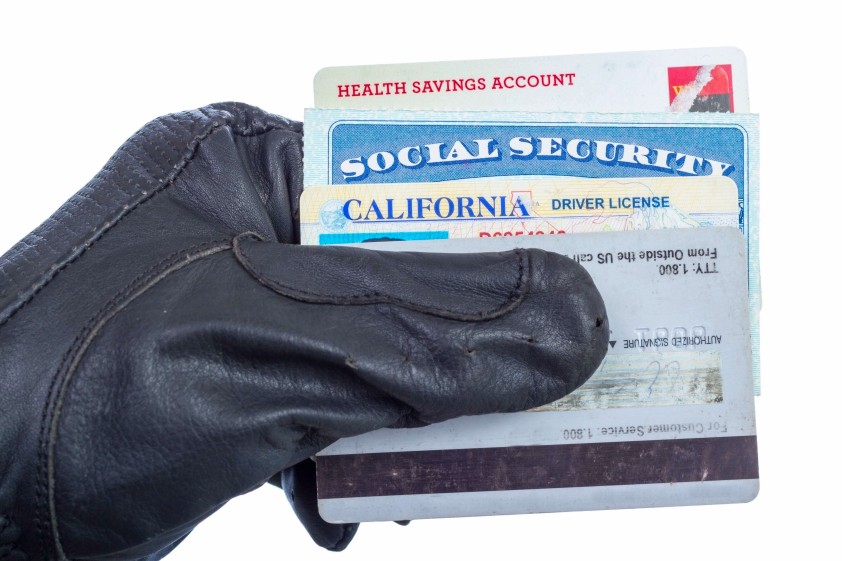
Much of the information compromised in a breach, such as Social Security numbers and other personal details, remains relevant for years to come. This makes them valuable data after the fraudulent event. Over the years, fraudsters have exploited this information by selling it on dark web marketplaces and forums.
Understanding how criminals utilize stolen data long after the breach is critical for fraud managers trying to stay ahead of the curve. Let's break down exactly how this works and what your institution can do about it.
What Happens After a Data Leak?
In most cases, after a data leak, compromised information gets sold on the dark web, leading to theft, financial loss, and phishing attacks. Fraudsters like to move fast and monetize the stolen information as early as possible. In the 2013 Target breach, attackers exfiltrated card data starting December 2 and were selling forged cards on black markets as early as December 11, just 9 days later.
Although compromised data undergoes some validation and bundling, which can take days or weeks before it is sold, criminals, however, prioritize speed to evade detection and depreciating data value. In the monetization process, stolen data often ends up in various locations across the internet. Some of them include:
Dark Web MarketPlace
The dark web is a hidden part of the internet that’s only accessible through specialized browsers. Its anonymity makes it the ideal environment for illicit activity, where stolen information is sold, traded, and auctioned in bulk to cybercriminals. On these sites, people buy, sell and trade collections of personal information, credit cards, health records and a wealth of information that could be relevant in fraudulent activities.
In most cases, once a piece of information gets to the dark web, it’s out there forever. Even if the site hosting the information gets taken down, a huge chunk of the information is already spread across multiple locations globally, making it impossible to find and delete.
Forums and Chat Rooms
Telegram forums are known for being a major front for illicit activities, and the sales of stolen data is just one of the many. People sell information on these platforms by creating public or private channels and groups that function as black markets.
The platform’s anonymity and large user base are some factors that make this easier, along with the fact that most of the transactions and deliveries are carried out by automated bots, which makes it more difficult to track them down.
Private Networks
Stolen data may also circulate within private criminal networks. These spaces are typically secured, invitation-only, and far more difficult for outsiders and law enforcement to infiltrate. The access to these sites is built on trust and reputation, with communication and transactions often taking place over encrypted messaging platforms like Telegram or Signal.
Public Data Dumps
Attackers often release a portion of the data to prove they really accessed a system. This is common in ransomware and extortion cases, where a public dump is used to pressure victims into paying.
Also, once stolen data is outdated or widely circulated, it may no longer be worth selling. At that point, attackers might decide to dump it publicly since this costs nothing and can still cause damage.
How Does Stolen Data Get Weaponized?
Fraudsters no longer use stolen card numbers solely for unauthorized purchases. The tactics have evolved significantly. Let’s look at some ways stolen data from your institution can get weaponized.
Account Takeover Schemes
Using passwords and security questions is a fraud tactic that dates back to earlier breaches. Criminals systematically test credentials across multiple financial platforms. Password reuse is shockingly common, which means a 2022 retail breach can unlock bank accounts in 2026. It’s surprising how this still works in 2026, and also speaks to how common password reuse is among customers.
Synthetic Identity Fraud
Fraudsters combine real and fabricated information from multiple breaches to create entirely new identities. These Frankenstein identities are incredibly difficult to detect because they contain legitimate data that would always pass verification checks. A customer could be in the United States, while someone on the other side of the world uses their identity for fraudulent activities.
Social Engineering
Attackers leverage stolen personal details such as names, emails, job titles, or credentials from these data breaches to stage targeted attacks. They achieve this through pretexting, or phishing attacks. With pretexting, these attackers create fabricated scenarios, such as posing as IT support, and use the victim’s correct details to extract more information. They also use emails or calls, reference real data to build trust and trick users into sharing sensitive details
Card Testing with Patience
Rather than immediately testing stolen card numbers in bulk, sophisticated operations now dribble out small transactions over weeks or months. This low-and-slow approach makes it harder for consortium data to flag patterns because the volume doesn't trigger standard velocity rules.
A Modern Approach to Fighting Back
There are several fraud prevention and mitigation approaches that work today, thanks to evolving technology. Here are some best practices:
Leverage Consortium Intelligence
Individual institutions only see their own fraud patterns. Collaborative platforms and consortium networks are tools that some financial institutions are adding to their fraud prevention arsenal. Solutions like Rippleshot’s Fraud Interceptor and the Fraud Intelligence Collective can detect emerging exploitation patterns early and proactively prevent them from hitting your portfolio.
Layer Your Defense
Don't rely solely on transaction monitoring. Combine it with behavioral analytics, device fingerprinting, and continuous authentication. Combining multiple data points into a validated score increases the chances of detecting subtle behavioral differences that point to fraud.
Enhance Proactive Card Management
Augment your processor’s global fraud prevention rules with additional rules developed internally or from third-party providers to proactively prevent card fraud. Often, internal or third-party rules have a lower false-positive ratio than processors, giving the added benefit of stopping less transactions and preserving interchange fees.
Additionally, preventing fraud in real-time has a compounding effect downstream by reducing cases, chargebacks, and call center traffic. Rippleshot’s Fraud Interceptor supplements a financial institution’s card fraud prevention by blocking fraudulent and scam merchants’ transactions, reducing fraud and downstream chargebacks, phishing, and account takeover attempts.
Monitor Compromised Card Accounts More Carefully
Not all compromised cards result in fraud. While numbers are hard to come by, our research shows that less than 25% of compromised cards end up fraudulent. Try to identify which compromised cards are more likely to become fraudulent (for example, those that are part of multiple data breaches) and only re-issue those while putting the other compromised cards in a watch list, and if possible add to your transaction authentication process.
To Wrap It Up
Data breaches and stolen information, and how that is monetized creates multiple threats to financial institutions. Once your data is compromised, the vulnerability lingers. Fraudsters understand this timeline intimately and structure their operations accordingly. They're patient, methodical, and increasingly sophisticated at exploiting the gap between when institutions believe the risk has passed and when it actually has.
Fraud managers and financial institutions need a robust, proactive, and layered approach to fraud prevention. Partnering with third-party providers like Rippleshot to add AI and consortium-based tools can reduce fraud efficiently and build customer trust. Learn more at www.rippleshot.com or schedule a demo to see how predictive intelligence can transform your fraud prevention strategy.
Let's Talk
You have fraud frustrations? We have the solutions. Let's discuss what you are dealing with and we can learn more and share how we can help.


%20(3).png)
